
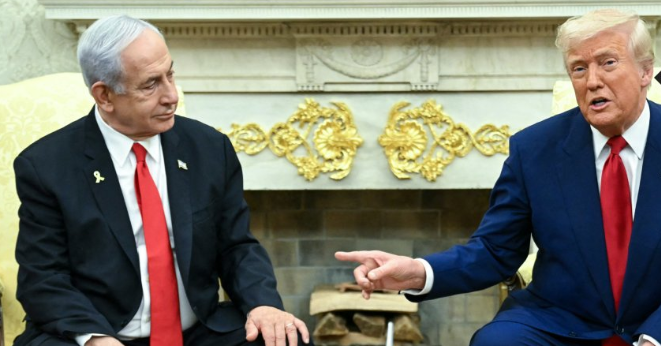
US officials have stated that Israel did not notify Washington in advance before launching its unprecedented airstrike on Doha, Qatar’s capital, on September 9, 2025. The strike, targeting senior Hamas leaders, has raised questions about US-Israel coordination, strained regional diplomacy, and disrupted Qatar’s mediation efforts in Gaza ceasefire talks.
US says Israel Did Not Notify United States Before Striking Qatar’s Capital, Doha
On September 9, 2025, Israel carried out a historic and highly controversial airstrike in Doha, the capital of Qatar, targeting senior Hamas leaders. The operation, which the Israel Defense Forces (IDF) dubbed “Summit of Fire,” marked the first known Israeli military action on Qatari soil. The unprecedented strike not only escalates tensions in the region but also raises critical questions about its impact on ongoing ceasefire negotiations and the role of the United States, a key ally of both Israel and Qatar.
Details of the Strike
The IDF confirmed it conducted a “precise strike” in Doha, specifically in the Katara district near Wadi Rawdan Street and West Bay Lagoon, a central residential neighborhood. Hamas has maintained its political headquarters in Qatar for years, making it a focal point for such an operation. Witnesses reported around 12 airstrikes taking place at approximately 4:00 PM local time, with loud explosions and thick black smoke rising over the city.
Israeli officials stated that the strike targeted senior Hamas leaders, including Khalil al-Hayya, Hamas’s chief negotiator, and Zaher Jabarin, a key figure managing Hamas’s finances and West Bank operations. Other reported figures present included Khaled Mashaal, Muhammad Darwish, and Izzat al-Rishq, who were allegedly holding a meeting to discuss a U.S.-proposed ceasefire plan for Gaza.
The outcome of the strike remains contested. Sources close to Hamas claimed that all senior leaders survived, though al-Hayya’s son Hammam al-Hayya and his office director Jihad Lubbad were killed, with several others wounded. In contrast, Saudi outlet Al-Arabiya reported that Khalil al-Hayya was killed, though this has not been independently confirmed. The Qatari Interior Ministry said the situation had been stabilized and that specialized teams were assessing the extent of damage.
Israel said the strike was carried out by Air Force jets using precise munitions designed to minimize civilian harm. Nonetheless, the attack struck residential buildings, triggering global condemnation.
Conflicting Reports on U.S. Notification
The question of whether the United States was informed in advance has become one of the most debated aspects of the strike. Axios reported that the Trump administration was only notified once the missiles were already in the air, leaving no room for U.S. input. A U.S. defense official told ABC News, “We’re aware of these reports but do not have any additional information to provide,” suggesting limited prior knowledge.
However, CNN and NBC News offered a different version, citing both Israeli and American officials who confirmed that the U.S. was informed before the strike, though the extent of the notice remains unclear. CNN said that the White House and State Department were contacted ahead of time, while NBC emphasized that the U.S. had no direct involvement. Adding to the confusion, Israeli media outlet Channel 12 claimed that President Donald Trump himself gave a “green light,” though Prime Minister Benjamin Netanyahu’s office strongly refuted that claim.Doha
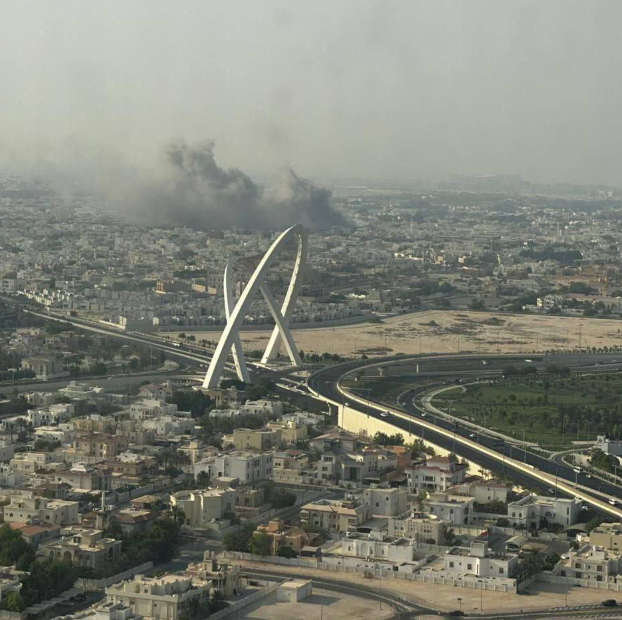
The U.S. Embassy in Doha issued a shelter-in-place advisory for its personnel and urged American citizens in Qatar to do the same. Qatar hosts Al Udeid Air Base, the largest U.S. military facility in the Middle East, underscoring the sensitivity of the strike.
Qatar’s Reaction
Qatar’s Foreign Ministry, represented by spokesperson Majed Al Ansari, condemned the airstrike as a “cowardly and criminal assault” and a “blatant violation of international laws and norms.” Doha described the attack as reckless and dangerous for both citizens and residents, warning Israel that its actions would not go unanswered.
In response, Qatar suspended its role as a mediator in ongoing Gaza ceasefire negotiations. This decision followed a September 8 meeting where Qatari Prime Minister Sheikh Mohammed bin Abdulrahman Al-Thani had urged Hamas leaders to accept a U.S.-backed ceasefire proposal. The strike has now cast serious doubt over any further mediation efforts from Doha.
International Reactions
The international community has strongly condemned Israel’s actions. United Nations Secretary-General António Guterres called the strike a “flagrant violation” of Qatar’s sovereignty and emphasized Qatar’s positive role in ceasefire negotiations. He urged all parties to focus on achieving a lasting ceasefire instead of escalating hostilities.
Neighboring Arab states voiced sharp criticism as well. Jordan’s Foreign Minister Ayman Safadi labeled the strike a “blatant violation of international law,” pledging full support for Qatar. Saudi Arabia’s Crown Prince Mohammed bin Salman condemned the attack and expressed solidarity with Qatar, while the United Arab Emirates described the strike as “blatant and cowardly aggression,” urging the UN Security Council to take action. Yemen’s President Al-Mashat also denounced the strike, warning that it posed risks to the stability of the wider Arab and Islamic world.
From outside the region, Pope Leo XIV expressed concern, calling the strike “very serious” and urging restraint from all sides.
Context and Implications
The timing of the Israeli strike has been linked to an attack in Jerusalem just a day earlier. On September 8, Hamas gunmen killed six people on a bus in the city. Israeli leaders, including Prime Minister Benjamin Netanyahu and Defense Minister Israel Katz, justified the Doha operation as retaliation, while also framing it within the broader context of the October 7, 2023, Hamas attack on Israel. Netanyahu’s office stressed that the Doha strike was a “wholly independent Israeli operation,” denying direct U.S. involvement.
The immediate consequence of the strike has been the collapse of mediation efforts. Analysts such as Ghaith al-Omari of the Washington Institute warned that Israel’s decision to strike Hamas negotiators mid-discussion of a U.S. ceasefire proposal would severely undermine diplomatic efforts. The proposed ceasefire had focused on an exchange of hostages and talks aimed at ending the Gaza war. Families of Israeli hostages, such as Einav Zangauker, voiced fears that the operation could endanger captives, accusing Netanyahu of jeopardizing peace efforts.
The incident also heightens regional tensions. Qatar has already been the target of a missile strike earlier in 2025 when Iran hit Al Udeid Air Base in retaliation for U.S. actions against Iranian nuclear facilities. With Israel now carrying out a direct strike on Qatari soil, Gulf nations may view this as an unacceptable escalation. The move could also undermine Israel’s efforts to strengthen ties with Arab states in a broader alliance against Iran.
Israeli military officials have reiterated their stance of targeting Hamas leaders wherever they may be in the Middle East. Recent assassinations of Hamas figures, including Yahya Sinwar and Ismail Haniyeh, have signaled this aggressive approach. However, critics argue that the Doha strike, particularly its timing during sensitive ceasefire negotiations, risks destabilizing the region further and could be seen as extrajudicial action.
Conclusion
Israel’s “Summit of Fire” operation in Qatar has triggered shockwaves across the Middle East and beyond. The strike represents a turning point in the Israel-Hamas conflict, directly undermining ceasefire efforts while exposing divisions over U.S. involvement. As Qatar suspends its mediation role and Arab nations rally against Israel, the prospects for peace appear increasingly uncertain. The attack underscores Israel’s uncompromising stance against Hamas leadership but at the cost of inflaming regional tensions and potentially sabotaging fragile diplomatic progress.doha