
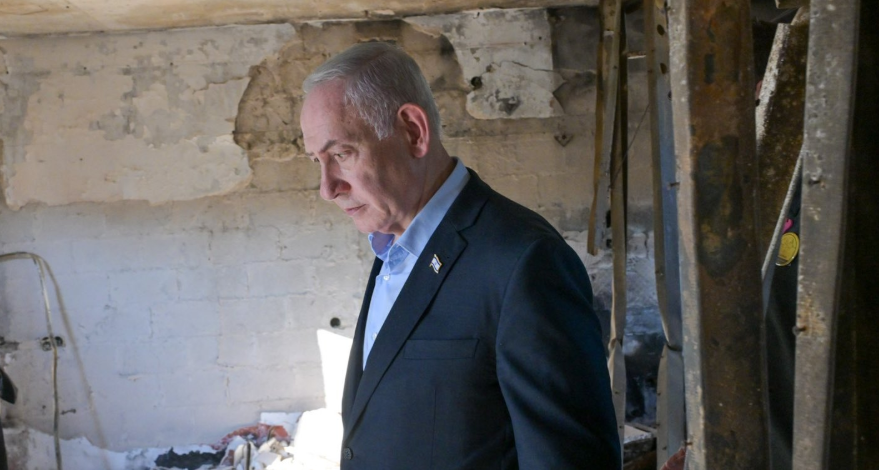
Israel carried out its first-ever airstrike in Qatar on September 9, 2025, targeting Hamas leaders in Doha during ceasefire talks. The strike, named “Summit of Fire,” hit residential areas in the Katara district, sparking global condemnation, straining Qatar’s mediation role, and raising concerns for U.S. interests in the Gulf.
Israel Conducts First-Ever Airstrike in Qatar
On September 9, 2025, Israel carried out an unprecedented airstrike in Doha, Qatar, targeting the senior leadership of Hamas in what the Israel Defense Forces (IDF) called Operation “Summit of Fire.” This marks the first known Israeli military strike on Qatari soil, a development that has sent shockwaves across the Middle East due to Qatar’s central role as a mediator in ceasefire negotiations and its hosting of the largest U.S. military base in the region, Al Udeid Air Base.
The Timeline and Execution
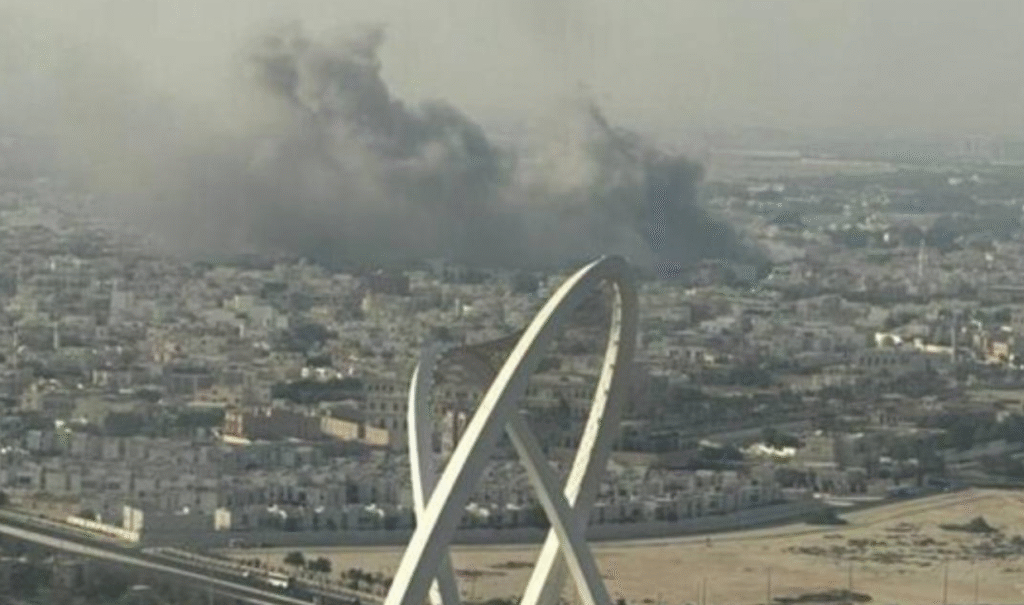
The strike occurred around 4:00 PM local time (1:00 PM GMT) in Doha’s Katara district, a residential area that houses members of Hamas’s political bureau. Eyewitnesses reported multiple explosions and black smoke rising over the city skyline. According to the IDF, the Israeli Air Force executed a precise strike using advanced intelligence and precision munitions to minimize civilian casualties. While Israel confirmed the involvement of its air force, it did not reveal the exact methods used, such as whether the strike was conducted by drones or missiles.
The targets of the operation included Hamas’s top political leaders—Khalil al-Hayya, Khaled Meshal, and Zaher Jabarin—who were reportedly meeting to discuss a U.S.-proposed ceasefire deal for Gaza. An Israeli intelligence official claimed that “the entire Hamas A-list was in the building.” However, reports about casualties remain conflicting. Middle East Eye reported that the leaders survived, while Saudi network Al-Arabiya claimed that al-Hayya was killed, a claim that has not yet been independently confirmed.
Context and Background
The strike comes at a highly sensitive time, coinciding with renewed U.S. efforts to broker a ceasefire in Gaza. The Qatari prime minister had just met Hamas leaders a day earlier, urging them to accept a U.S. proposal that involved the release of Israeli hostages in exchange for negotiations to end the Gaza war. Qatar has long hosted Hamas’s political office, serving as neutral ground for talks mediated by both Qatar and Egypt.
The attack also follows a series of Israeli operations across the Middle East. Just two weeks earlier, Israeli military chief Eyal Zamir warned that Israel would target Hamas leaders abroad, declaring that “most of Hamas’s leadership is abroad, and we will reach them as well.” In addition, Israel conducted strikes in Syria on the same day as the Doha attack and has been accused of targeting an aid flotilla off Tunisia’s coast.
Official Statements
The IDF and Israel’s Shin Bet security agency released a joint statement, calling the strike a precise operation targeting senior Hamas leaders they hold responsible for orchestrating the October 7, 2023, massacre and for directing Hamas’s ongoing war against Israel. Prime Minister Benjamin Netanyahu’s office emphasized that the attack was “a wholly independent Israeli operation,” distancing the U.S. from involvement despite reports that Washington was informed in advance.
Israeli Finance Minister Bezalel Smotrich welcomed the action, stating, “Terrorists will never have immunity from Israel anywhere in the world.”
Qatar strongly condemned the attack, with Foreign Ministry spokesman Majed al-Ansari calling it “a cowardly Israeli attack that constitutes a blatant violation of all international laws and norms and poses a serious threat to the security and safety of Qataris and residents in Qatar.” Qatar vowed not to tolerate such behavior and announced an investigation into the incident.
Hamas confirmed that its negotiators were targeted during a meeting on the U.S. proposal but claimed they survived. A Hamas source told Al Jazeera that the strike occurred precisely as discussions were underway about the potential deal.
The United States Embassy in Qatar issued a shelter-in-place order immediately after the explosions, advising American citizens to remain indoors. While some Israeli media outlets claimed that U.S. President Donald Trump gave a “green light” for the strike, U.S. officials have not confirmed this. The State Department and Trump’s Middle East envoy, Steve Witkoff, have so far declined comment.
Regional and International Reactions
The airstrike drew swift condemnation across the region. The United Arab Emirates described the incident as “blatant and cowardly aggression” and called on the UN Security Council to act against further escalation. Iran’s Foreign Ministry also denounced the strike as a “dangerous violation of international law and Qatari sovereignty.”
Turkey, Saudi Arabia, Jordan, and the United Nations also issued statements condemning the attack and warning of its destabilizing effects on regional peace.
Reactions inside Israel were divided. The Tikva Forum, representing families of Israeli hostages held in Gaza, welcomed the strike, calling it long overdue and necessary for ensuring the eventual release of hostages. However, other families expressed concern. Einav Zangauker, whose son is among the captives, accused Prime Minister Netanyahu of sabotaging ceasefire efforts and endangering hostages’ lives with this attack.
Implications and Analysis
Analysts warn that the strike could derail fragile ceasefire negotiations, as it directly targeted Hamas negotiators engaged in discussions about a U.S.-backed proposal. The timing undermines Qatar’s credibility as a neutral mediator, raising doubts about whether Doha can continue to serve as a safe venue for peace talks.
The strike also complicates U.S.-Qatar relations, given that the Gulf nation hosts between 8,000 and 10,000 American personnel at Al Udeid Air Base. The U.S. has relied on Qatar not only in Israeli-Palestinian negotiations but also in past diplomacy, such as U.S.-Taliban talks before 2021. This development raises concerns that no neutral ground is safe for conflict mediation.
For Israel, the strike reflects a broader regional strategy of targeting Hamas leaders wherever they may be, reinforcing its message that its enemies have no sanctuary. The action follows a pattern of Israeli operations across Gaza, Lebanon, Syria, Yemen, and Iran since 2023.
Visuals and Media Coverage
Photos and videos shared on social media and broadcast by Al Jazeera and Reuters showed black smoke billowing from Doha’s Katara district, with images of damaged residential buildings. Reporters highlighted the boldness of Israel’s actions, drawing comparisons to the assassination of Hamas leader Ismail Haniyeh in Tehran in 2024.
Unconfirmed Information
Several details remain unclear. Reports conflict over whether Khalil al-Hayya was killed, and no official confirmation of casualties has been provided. A Palestinian agency claimed two teenagers were killed in Doha, but this appears unrelated to the Hamas strike. Additionally, speculation about U.S. approval remains unverified.
Conclusion
Israel’s first-ever strike in Qatar marks a dangerous escalation in the ongoing conflict with Hamas, threatening to derail ceasefire negotiations and raising questions about regional stability. The attack has drawn widespread international condemnation, strained Qatar’s role as a mediator, and complicated U.S. interests in the Gulf. With both Israel and Hamas standing firm, the chances of a near-term peace deal now appear more uncertain than ever.